National service hotline:008615094320000

National service hotline:008615094320000


Years of experience
solutions across various industries


National service hotline
008615094320000
Selective catalytic reduction (SCR) flue gas denitrification technology
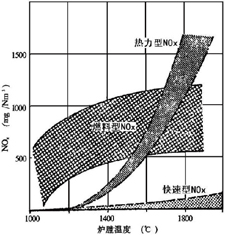
The formation mechanism of nitrogen oxides (NOX)
There are three main ways to generate NOX produced by coal combustion:
◇ Thermal type: generated by the oxidation of nitrogen and oxygen in the combustion air at high temperatures./FONT>
◇Rapid type: The hydrocarbons produced when the hydrocarbons in the fuel are burned in areas with high fuel concentrations react with nitrogen in the air, and the formed compounds such as CN and HCN are continuously oxidized and generated.
◇ Fuel type: The nitrogen compounds in the fuel are thermally decomposed during the combustion process and are further oxidized to form. Nitrogen oxide (NOX) pollution control technology
According to the NOX generation mechanism, the control measures taken are divided into two categories:
◇ Adopt low-nitrogen combustion technology: inhibit the generation of NOX during the combustion process.
For example: low nitrogen burner, air staged combustion, fuel staged combustion.
◇ Flue gas denitration method: Treat the generated NOX.
For example: selective catalytic reduction (SCR), selective non-catalytic reduction (SNCR), SCR/SNCR hybrid method.
Selective Catalytic Reduction (SCR)
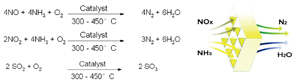
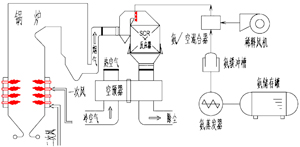
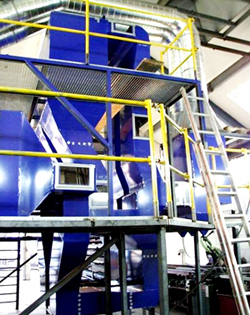
Selective Catalytic Reduction (SCR), under certain reaction temperature conditions, causes the NOX in the flue gas and the reducing agent NH3 to undergo a reduction reaction under the action of a catalyst, and the generated products are non-toxic and pollution-free N2 and H2O. Reactor layout (high temperature and high dust layout) Main technical indicators of SCR denitrification
Denitrification efficiency ≥80%
Ammonia escape rate ≤ 3 ppm
SO2/SO3 conversion rate ≤1%
System resistance ≤1000 Pa (3 layers)
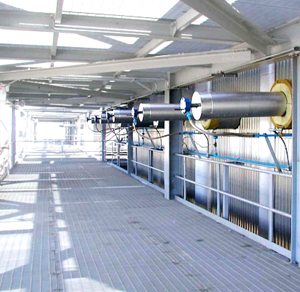
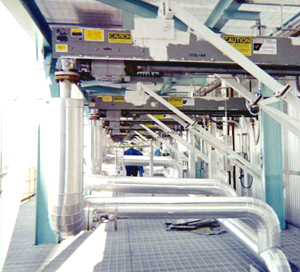
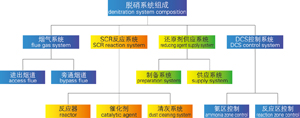
Catalyst life ≥16000/24000 h Selection of dust cleaning equipment Sonic cleaner Rake steam cleaner SCR system composition Application of urea pyrolysis technology in SCR denitrification project
The process operation is simple and reliable, requiring basically no manpower, maintenance, or spare equipment.
◇ The urea system does not require fire prevention and safety distances and occupies a small area.
◇ Low or no fuel consumption, low operating costs.
◇ It has strong ability to follow load changes and the response time is as short as 5 to 30 seconds.
◇ After stopping adding ammonia, there is no ammonia remaining in the system and there is no problem of ammonia leakage.
◇ No high-pressure equipment, no corrosion, and no concerns about ammonia explosion concentration.
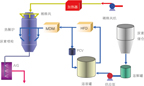
◇ There is no safety risk at all. Urea pyrolysis process flow Heat source (315~540℃ hot air) Selective non-catalytic reduction (SNCR) Basic principles of SNCR
Selective Non-Catalytic Reduction (SNCR) is to spray an amino reducing agent (urea/ammonia water) into the flue gas with a temperature of 850°C to 1250°C without the need for a catalyst. A method that selectively reacts chemically with nitrogen oxides (NOX) in flue gas to reduce NOX to generate nitrogen (N2) and water (H2O). Main chemical reactions:
Using ammonia as reducing agent: 4NH3+4NO+O2=4N2+6H2O
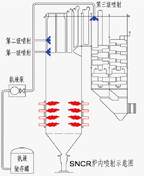
Using urea as reducing agent: CO (NH2)2 + 2NO + 1/2O2 = 2N2 + CO2 + 2H2O NCR diagram
The SNCR denitration process uses the furnace and separator as reactors to carry out flue gas denitration reaction.
The reducing agent is sprayed into the furnace through a nozzle installed at the inlet of the CFB boiler separator or the screen superheater area, and the reducing agent mixes with the flue gas to undergo a chemical reaction.
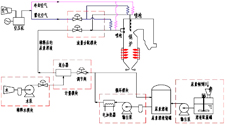
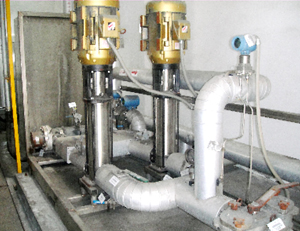
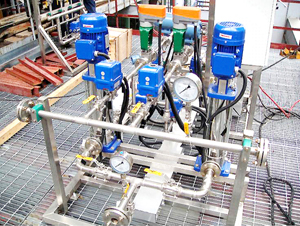
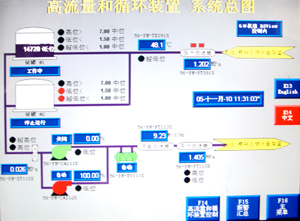
SNCR process flow chart Urea solution preparation and storage system Granular urea dissolving tank High flow circulation module (HFD) + back pressure control valve (PCV) HFD is used to transport a reducing agent solution with a certain pressure and flow rate, and forms a circulation loop with the reducing agent solution storage tank. PCV is used to regulate the stable flow and pressure required in the circulation loop. Equipment: filter, 2 multi-stage centrifugal pumps, online electric heater, pressure control valve and instruments for remote control and monitoring of pressure, temperature, flow and concentration of the circulation system. High flow circulation module Dilution metering module (DW-DM) The MDM accurately measures and independently controls the reductant solution delivered to each injector. Equipment: filters, temperature, pressure, flow monitoring instruments, control valves, etc.
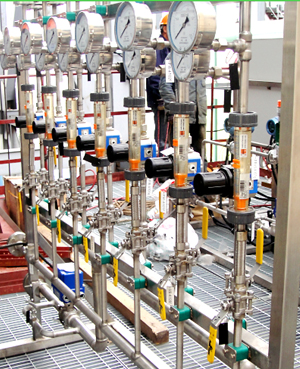
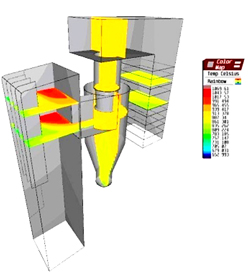
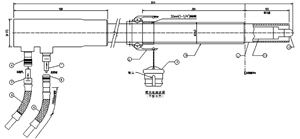
Distribution Module (MDM) The MDM accurately measures and independently controls the reductant solution delivered to each injector. Equipment: filters, temperature, pressure, flow monitoring instruments, control valves, etc. injection system Front wall short spray gun Side wall long spray gun DCS/PLC control system SNCR control system SNCR technical features ◆ Advantages: ◇ Does not use catalysts, does not increase system resistance, and is not affected by coal type ◇ Simple system, low investment, small footprint and short construction time ◇ Easy to operate and low operating costs ◇ No high-voltage equipment, no corrosion, and no safety hazards at all Key technologies 1、Computer simulation technology. Including computer simulation fluid dynamics technology (CFD) and chemical kinetic modeling technology (CKM). Use CFD software to simulate the flue gas flow field and temperature field in the boiler. Use the CKM model to calculate the reaction rate between the reducing agent and NOX. Based on the calculation results, determine the maximum temperature area in the furnace under different boiler loads and different coal types, and determine a better injector layout plan. 2、Injectors with high atomization performance. The ejector uses compressed air as the atomization medium to introduce denitrification agent droplets into the flue gas flow. The droplets generated by this injector are small in size, evenly distributed, and have strong penetration, ensuring that the denitrification agent can fully contact with the NOX in the flue gas, thereby achieving higher denitrification efficiency and lower ammonia escape rate. 3、Telescopic multi-nozzle tube injector The multi-nozzle tube injector can spray the denitration agent directly and evenly into the flue gas flow, further improving the denitration efficiency and reducing the ammonia escape rate 4、Advanced monitoring methods and specialized process control technology The temperature monitoring system is an optical thermometer that can continuously measure. The thermometer measures the temperature of the flue gas in the furnace by sensing the visible light emitted by the fly ash particles, and determines the optimal injection area for the denitrification agent.
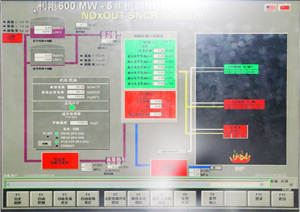
The special control system developed for the SNCR process can ensure that the SNCR technology has better load following capabilities and ensure that the SNCR system maintains better working conditions during operation.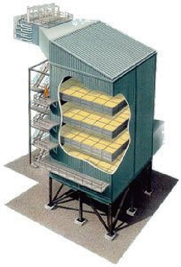
 Engineering design
 Engineering general contracting
 Water operations
 Environmental protection equipment
CopyRight © Jiangsu ZEYU Environmental Engineering Co., Ltd. Su ICP No. 14007113-1